Introduction
Let’s be clear: cast stretch film is already reliable for pallet wrapping, but nano stretch film brings new efficiency that matters in modern logistics. You don’t replace cast with nano in every case, but understanding how nano technology complements cast film helps you tighten loads, cut material use, and improve cost-effectiveness.
This article explains the technical edge of nano stretch film, why it pairs well with cast film on pallets, and how to implement this pairing on the packing line.
What nano stretch film brings to the table
Nano stretch film uses advanced extrusion techniques and multiple layers to create an ultra-thin film with higher tensile strength and better puncture resistance. Because it is thinner yet stronger, it reduces the amount of plastic per wrap cycle while delivering excellent load stability.
Nano films can stretch farther with less material, which translates into lower transport weight and cost. They also tend to give cleaner wrapping results on high-speed machines.
The strengths of cast stretch film
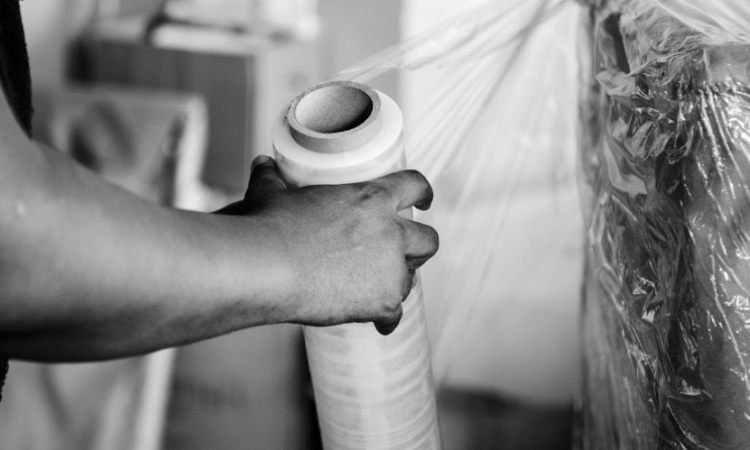
Cast stretch film is prized for its uniform thickness, high transparency, and predictable behavior on semi-automatic and fully automatic wrapping machines. It’s forgiving, easy to control, and works well across a wide range of pallet types.
For heavier or irregular loads, cast film’s consistent performance is an advantage; it handles cornering and tension better and provides the visibility many warehouses want.
Why combine nano with cast for pallets
Here’s the thing: you don’t have to choose one over the other. Use nano film where you want material savings and cast film where you need consistent machine handling and visual inspection.
A common setup is to use a nano film outer wrap to reduce total material while using cast film as a primary layer for adhesion and uniform contact with the load. The nano outer layer adds puncture resistance and reduces stretch requirements for the cast base layer.
Performance improvements you’ll see
Pairing nano with cast film can lower film consumption by a significant percentage because the nano layer contributes high holding force with less material. You’ll also notice improved puncture resistance on protruding corners and better light-blocking or privacy when using colored nano films.
This combination often reduces both film costs and shipping weight, especially for high-volume pallet operations.
Practical considerations in machinery and settings
Nano films are thinner and may behave differently on older wrappers. Check your pre-stretch settings and film carriage stability. You might need to adjust carriage speed or reduce pre-stretch ratios to keep tension steady and avoid film breakage during high-speed cycles.
Cast film is more tolerant of machine variation. When you combine them, ensure the film roll sizes and cores are compatible with your equipment, and train operators on tension changes they’ll encounter.
Sustainability and cost trade-offs
Nano film’s thinner gauge means less plastic moved and disposed of. That helps sustainability goals and can lower freight costs since you carry less weight. The trade-off is that nano film may be more sensitive during handling, so pairing it with cast film maintains robustness without losing the eco and cost benefits.
If sustainability is an objective, specify nano film options with recyclable formulations and consider using it as the external wrap while cast serves internal purposes.
How to test the pairing on your line
Start small: run a pilot with representative pallets. Wrap identical loads with cast-only, nano-only, and a cast-plus-nano combination. Measure film use per pallet, load stability during transit simulation, and any punctures or failures. Compare the results and optimize pre-stretch ratios.
This empirical approach tells you whether the pairing reduces cost without compromising security.
Conclusion
Nano stretch film won’t replace cast stretch film overnight, but it can boost performance and sustainability when applied thoughtfully. Use cast for consistent, machine-friendly base wrapping and add a nano outer layer to cut material use and increase puncture resistance. Run a short pilot, adapt machine settings, and you’ll likely find the balance that lowers cost while keeping shipments secure.